News / Highlights / Colloquium
EPJ A Highlight - Germanium detectors get position sensitive
- Details
- Published on 21 June 2016
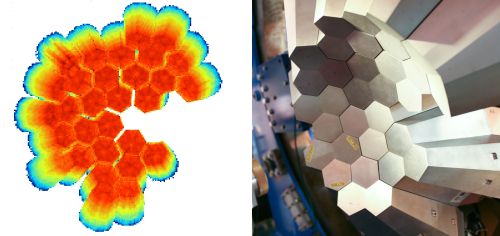
High purity germanium detectors have grown into the most popular devices within the field of gamma ray spectroscopy. The sensitive part of these detectors consist of the largest, purest and monocrystalline semi-conductors used on earth. In the past Ge, detectors were famous for their outstanding energy resolution and timing information for electromagnetic radiation, especially in the field of nuclear physics and nuclear astrophysics. Recently the introduction of digital data acquisition systems and the segmentation of the Ge crystals opened up new opportunities. The interaction position of the gamma rays inside the detector volume provides new additional information by means of the pulse shape of the various signals. In this way, the Ge detector becomes a position sensitive device and allows for a novel detection method called gamma-ray tracking.
EPJ A Highlight - New approach to nuclear structure, freely available
- Details
- Published on 01 June 2016
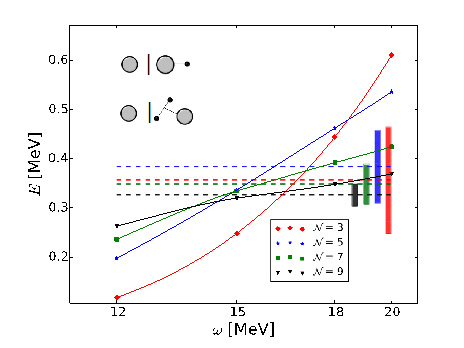
Use of relative coordinates in nuclear structure calculations helps reduce the amount of computational power required
The atomic nucleus is highly complex. This complexity partly stems from the nuclear interactions in atomic nuclei, which induce strong correlations between the elementary particles, or nucleons, that constitute the heart of the atom. The trouble is that understanding this complexity often requires a tremendous amount of computational power. In a new study published in EPJ A, Susanna Liebig from Forschungszentrum Jülich, Germany, and colleagues propose a new approach to nuclear structure calculations. The results are freely available to the nuclear physicists’ community so that other groups can perform their own nuclear structure calculations, even if they have only limited computational resources.
EPJ A Managing Editor Reviews Ulf-G. Meißner receives 2016 Lise Meitner Prize
- Details
- Published on 25 May 2016
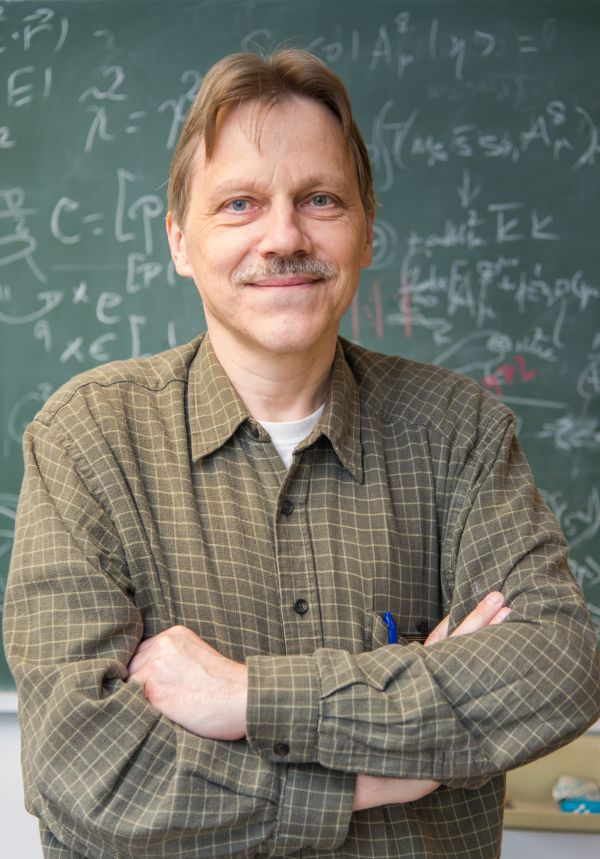
The Nuclear Physics Division of the EPS awards the prestigious Lise Meitner Prize every alternate year to one or several individuals for outstanding work in the fields of experimental, theoretical or applied nuclear science. Professor Ulf-G.Meißner, Universität Bonn and Forschungszentrum Jülich, Germany, Managing Editor for Reviews and former Editor-in-Chief of EPJ A, receives the 2016 Lise Meitner Prize “for his developments and applications of effective field theories in hadron and nuclear physics, that allowed for systematic and precise investigations of the structure and dynamics of nucleons and nuclei based on Quantum Chromodynamics”.
EPJ A Highlight - Nuclear physics’ interdisciplinary progress
- Details
- Published on 10 May 2016
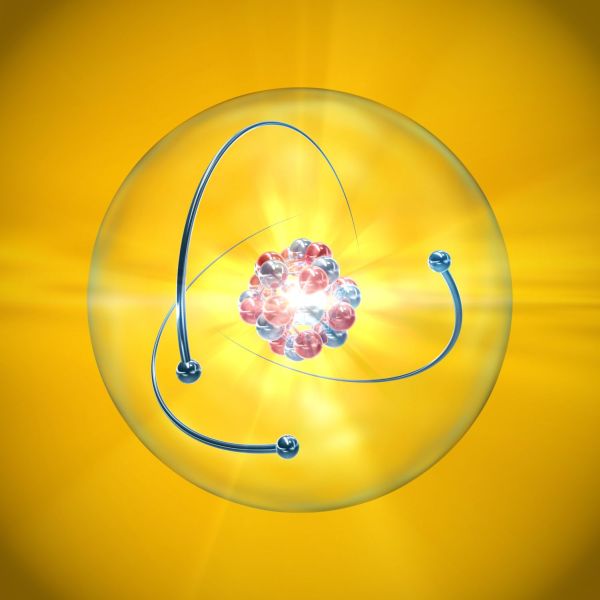
Theoretical nuclear physics could yield unique insights by extending methods and observations from other research fields
The theoretical view of the structure of the atom nucleus is not carved in stone. Particularly, nuclear physics research could benefit from approaches found in other fields of physics. Reflections on these aspects were just released in a new type of rapid publications in the new Letters section of EPJ A, which provides a forum for the concise expression of more personal opinions on important scientific matters in the field. In a Letter to the EPJ A Editor, Pier Francesco Bortignon and Ricardo A. Broglia from the University of Milan, Italy, use, among others, the example of superconductivity to explain how nuclear physics can extend physical concepts originally developed in solid state physics.
EPJ A Highlight - Analysing Coulomb-excitation experiments with exotic beams
- Details
- Published on 25 April 2016
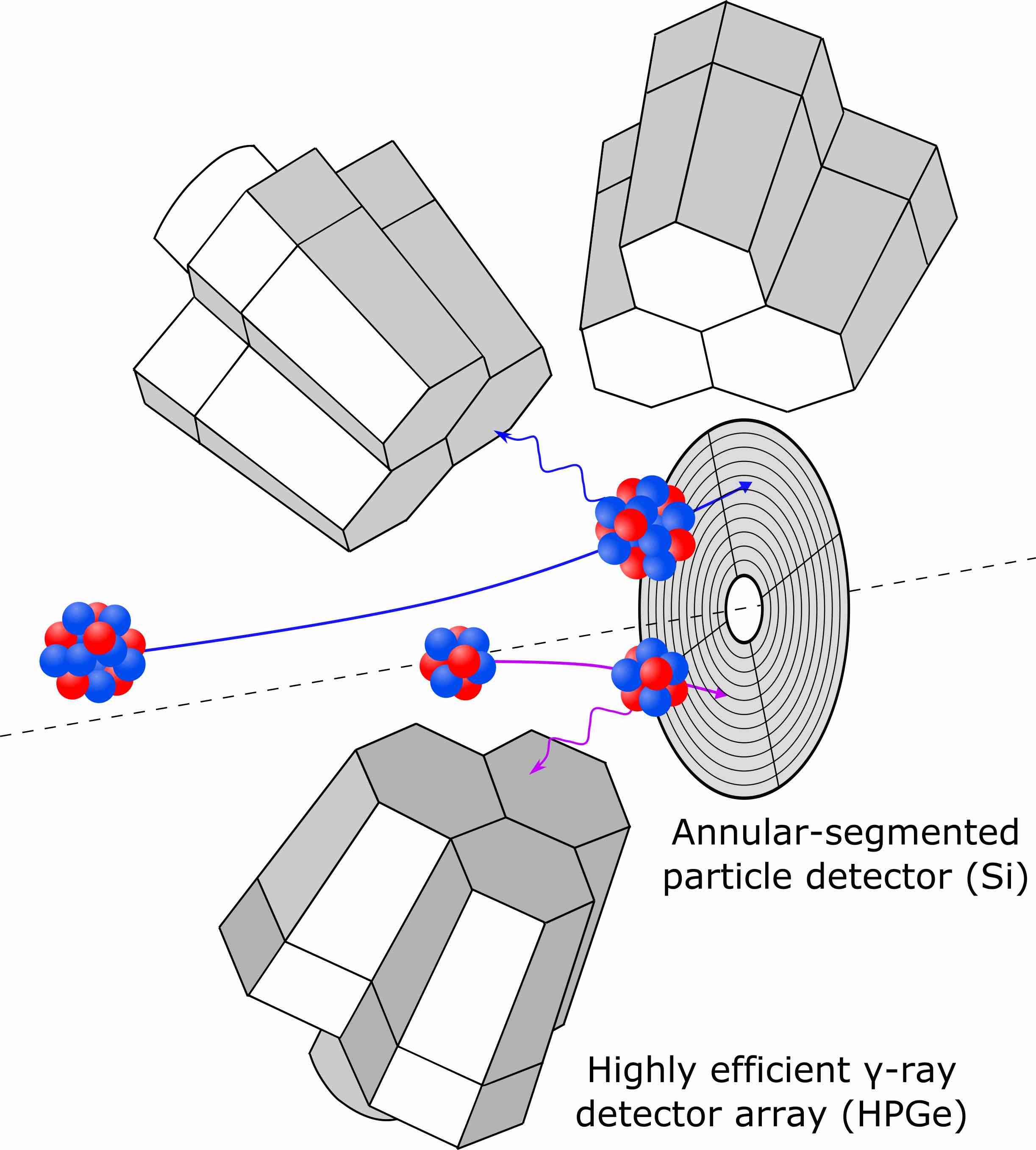
This paper presents a number of novel and alternative analysis techniques to extract transition strengths and quadrupole moments from Coulomb excitation data with Radioactive Ion Beams (RIBs) using the GOSIA code. It is anticipated that related approaches and techniques will gain an even greater importance as a wider range of post-accelerated RIBs becomes available at the next generation of ISOL facilities.
EPJ A Highlight - First measurement of 60Ge β-decay
- Details
- Published on 22 April 2016
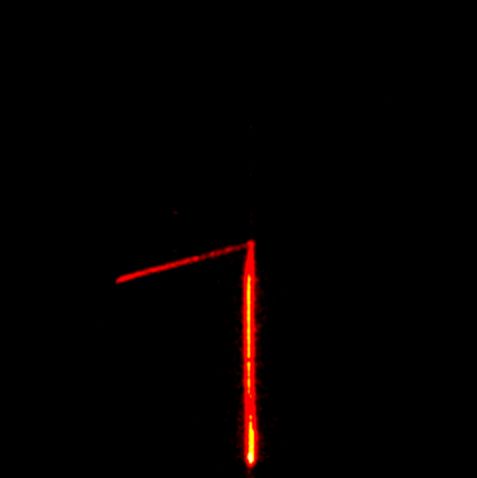
60Ge, with its 28 neutrons and 32 protons, is an extremely exotic nucleus, discovered about 10 years ago when only three ions were produced. Its decay properties were measured for the first time in this work. In this experiment, performed at the National Superconducting Cyclotron Laboratory (MSU, USA), the
60Ge ions were produced in 78Kr beam fragmentation reactions and separated from the other reaction products in the A1900 separator. The ions were detected in the active volume of the gaseous time-projection chamber with optical readout (OTPC), where they later decayed. This detector allows exotic decay modes to be identified, even with very small statistics present. The decay of about 20
60Ge ions was observed by β-delayed proton emission yielding a branching ratio of ~100% and a half-life of 20+7-5 ms. This value agrees well with theoretical predictions.
EPJ A Review - Melting hadrons, boiling quarks
- Details
- Published on 27 October 2015
In the context of the Hagedorn temperature half-centenary our understanding of the hot phases of hadronic matter both below and above the Hagedorn temperature is reviewed. The first part of this review paper just published in EPJ A addresses many frequently posed questions about properties of hadronic matter in different phases, phase transition and the exploration of quark-gluon plasma (QGP). The historical context of the discovery of QGP is described and the role of strangeness and strange antibaryon signature of QGP illustrated. In the second part the corresponding theoretical ideas and how experimental results can be used to describe the properties of QGP at hadronization are described.
EPJ A Highlight - A new generation of chiral nuclear forces
- Details
- Published on 11 May 2015
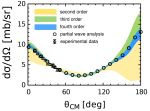
Chiral effective field theory provides a systematically improvable perturbative approach to deriving nuclear forces in harmony with the symmetries of Quantum Chromodynamics. Combined with modern few- and many-body methods, this framework represents a commonly accepted procedure for ab initio studies of nuclear structure and reactions.
In this paper, the authors introduce a new generation of nucleon-nucleon forces up to fourth order in the chiral expansion. By employing an appropriate regularization in coordinate space, which maintains the analytic structure of the amplitude, the authors succeed in significantly reducing the amount of finite-cutoff artefacts. In addition, a simple approach to estimating the theoretical uncertainty in few- and many-nucleon calculations from the truncation of the chiral expansion is formulated. By calculating various two-nucleon scattering and bound-state observables, the authors verify that the results at different chiral orders and for different values of the regulator are indeed consistent with each other and with the experimental data.
The new generation of chiral nuclear forces is expected to provide an excellent starting point for applications in nuclear physics.
EPJ A Highlight - Pionic-Hydrogen Atom and Quantum Chromodynamics
- Details
- Published on 30 March 2015
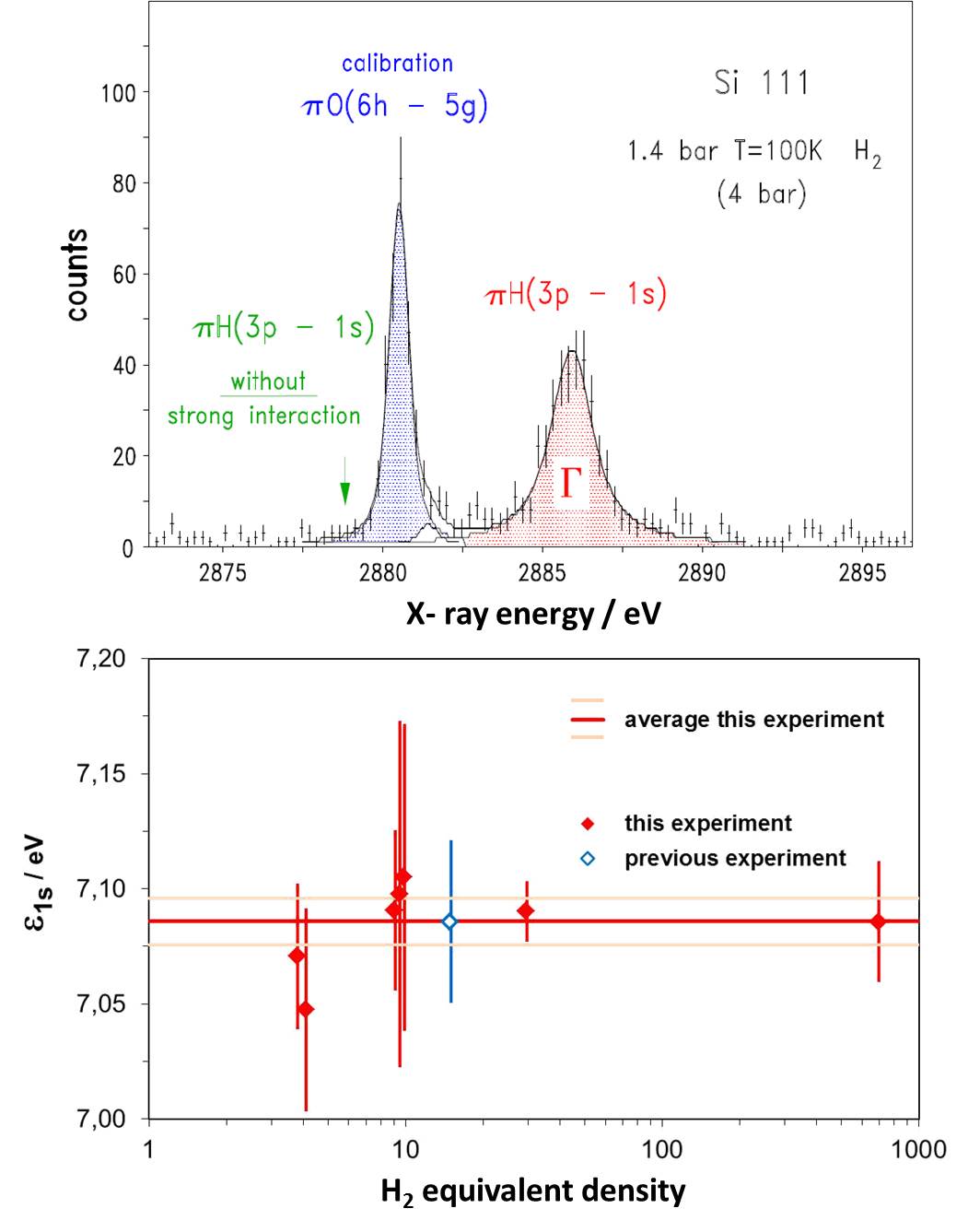
Analogous to the vast amount of knowledge acquired on the electronic hydrogen atom over the last century and the success of Quantum Electrodynamics (QED), hadronic physics is using a similar system, namely “pionic hydrogen” - a hydrogen atom where the electron is replaced by a negatively charged pion - as a laboratory for investigating Quantum Chromodynamics (QCD). Like in electronic hydrogen the finite size of the proton plays a role in the precise determination of the ground state of the atom. The smaller Bohr radius of the pion offers a larger sensitivity to the strong interaction between the pion and the proton, leading, e.g., to an energy shift compared to the ground state energy if only the electromagnetic interaction is considered. The precise determination of this shift provides a benchmark of our understanding of the pion-proton strong interaction from basic principles in QCD. To this end an exquisite experiment was devised and performed at the high intensity, low energy pion beam at the Paul Scherrer Institut using a cyclotron trap and an ultimate resolution Bragg spectrometer leading to an impressive four fold improvement compared to the previous best measurement as shown in Fig. 1.
EPJ A Highlight - Subtracted dispersion relation estimate of two-photon exchange
- Details
- Published on 05 March 2015

Elastic electron-proton scatterings (with one-photon exchange) have always provided fundamental information on general properties of the proton. Recently, two experimental approaches, with and without polarized protons, gave strikingly different results for the electric over magnetic proton form factor ratio. Similarly, a mysterious discrepancy (“the proton radius puzzle”) has been observed in the measurement of the proton charge radius in different experiments, one of which is electron-proton scattering. Two-photon exchange (TPE) contributions have been proposed as a plausible solution to resolve the puzzles, but their estimates have strong model dependences. A quantitative understanding of TPE effects, based on general principles and avoiding model dependences, is necessary. A subtracted dispersion relation formalism for the TPE has been developed and tested. Its relative effect δ2γ on the elastic cross section is in the 1-2 % range for a low value of the momentum transfer Q2 as function of the kinematic parameter ε, ranging between ε = 0 (backward scattering) and ε = 1 (forward scattering).